Featured Listings
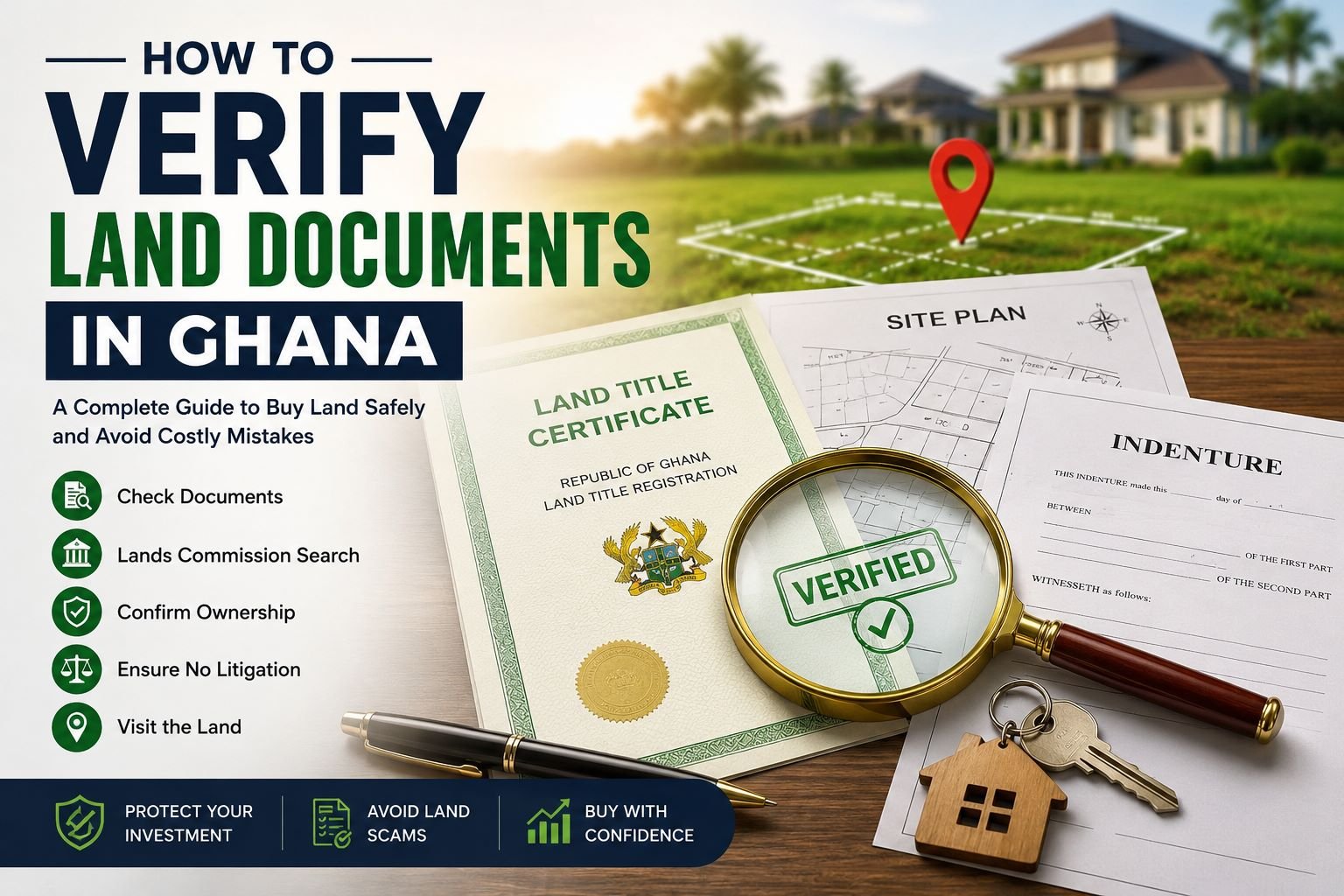
Buying land is one of the biggest investments many people make in Ghana. However, land fraud, ownership disputes, and fake documents remain common challenges in the real estate industry. Whether you are buying land in Accra, Kumasi, Tema, or any part of Ghana, understanding how to verify land documents in Ghana can save you from financial loss and legal problems.
Before making any payment, buyers must conduct proper due diligence to confirm ownership, authenticity, and legal status. In this guide, we explain the key steps to verify land documents in Ghana and avoid land scams.
Why Land Verification in Ghana Is Important
Many people rush into purchasing land because of attractive prices or pressure from sellers. Unfortunately, this often leads to problems such as multiple ownership claims, litigation, government acquisition issues, and fake title documents.
Proper land verification in Ghana helps buyers:
- Confirm the true owner of the land
- Detect fake or forged land documents
- Avoid buying litigation land
- Prevent future legal disputes
- Ensure secure land investment
If you are planning to buy land, it is always advisable to work with a trusted real estate professional before payment.
1. Request All Land Documents from the Seller
The first step in land title verification in Ghana is to ask the seller for all available documents related to the land.
Common land documents include:
Site Plan
A site plan shows the exact location, dimensions, and boundaries of the land. It also helps determine whether the land overlaps with another property.
Indenture
An indenture is the legal agreement that transfers ownership from the seller to the buyer. It contains details of the landowner, buyer, location, and agreed terms.
Land Title Certificate
If the property is in a title registration area, the seller should provide a valid land title certificate. This document confirms ownership and registration.
Allocation Paper
In some customary lands, allocation papers are issued by chiefs or family heads before formal registration.
Without proper documents, buyers should proceed cautiously.
3 Things to Check Before Buying Land in Ghana.
2. Conduct a Search at the Lands Commission
One of the most important ways to verify land documents in Ghana is by conducting an official search at the Lands Commission.
The Lands Commission helps buyers determine:
- The rightful owner of the land
- Whether the land is registered
- If there are ownership disputes
- Whether the land has legal restrictions
You can submit the site plan and available documents to conduct a land search. This process helps reveal whether the seller truly owns the land.
A professional property consultant can assist if you are unfamiliar with the process.
3. Verify That the Land Is Not Under Litigation
One of the biggest mistakes buyers make is failing to check whether land is under court dispute.
Litigation land often involves multiple ownership claims or legal conflicts between families, individuals, or companies. Buying such land can result in years of legal battles and financial loss.
Ask questions such as:
- Has anyone claimed ownership before?
- Are there ongoing disputes?
- Has the land ever been taken to court?
Speak with nearby residents and local authorities to gather more information about the property.
4. Visit the Land Location Personally
Never buy land in Ghana without visiting the site physically.
A physical inspection helps buyers:
- Confirm the actual location
- Verify boundaries
- Check accessibility
- Identify encroachment issues
- See nearby developments
Some fraudsters sell land they do not own or show fake locations to buyers, especially people living abroad.
If you are buying property from overseas, appoint a trusted representative or real estate company to inspect the land.
5. Confirm Whether the Land Is Government Acquired
In some cases, land may be affected by government acquisition or future infrastructure projects.
Buying government-acquired land can lead to demolition, compensation issues, or complete loss of investment.
A proper land verification process in Ghana should confirm whether the property falls under:
- Government acquisition
- Road reservations
- Waterway restrictions
- Future public development projects
This information can often be confirmed through the Lands Commission or survey professionals.
6. Work with a Trusted Real Estate Professional
Many land fraud cases happen because buyers try to handle everything alone.
Working with experienced property consultants can reduce risks significantly. A reliable real estate company can help with:
- Document verification
- Site inspections
- Land searches
- Ownership confirmation
- Safe transaction guidance
Whether you are a first-time buyer or an investor, professional support can make the process easier and safer.
Speak to our dedicated customer service.
Common Red Flags When Buying Land in Ghana
Watch out for these warning signs:
- Seller refuses document verification
- Price is unusually cheap
- Pressure to make immediate payment
- Missing site plan or indenture
- Conflicting ownership claims
- No witnesses or legal representatives involved
If something feels suspicious, pause and verify everything thoroughly.
Our Parting Word
Understanding how to verify land documents in Ghana is essential before making any land purchase. Taking time to conduct proper due diligence can protect your money and secure your investment.
Always verify ownership, inspect the property physically, conduct a Lands Commission search, and ensure the land is free from litigation before payment.
At Autonaba, we believe informed buyers make smarter property decisions. If you need help with land verification in Ghana, property guidance, or secure land acquisition, our team is ready to assist.
Buying land safely starts with proper verification.
Featured Listings