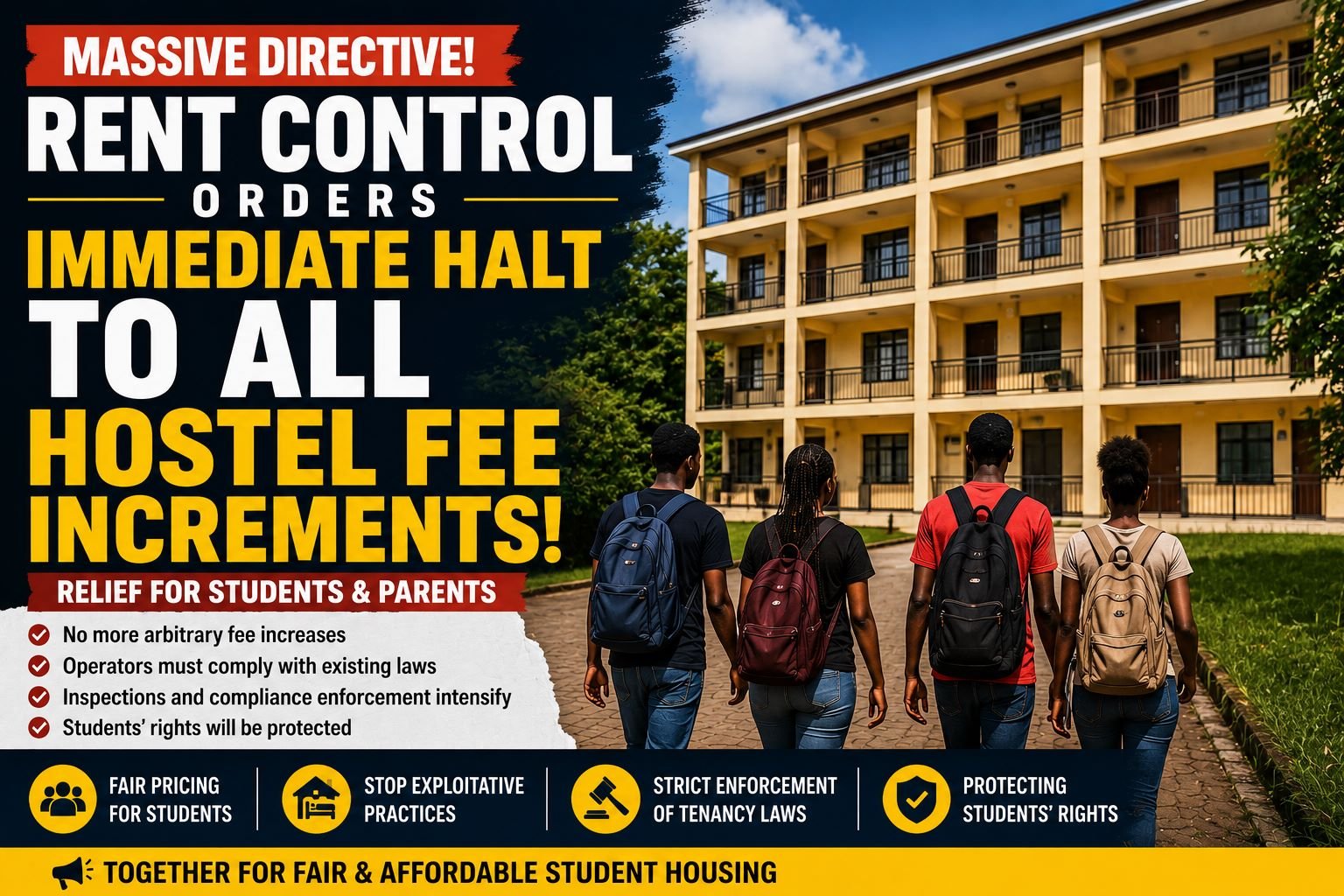
Students and parents across Ghana may finally be getting some relief as the Rent Control Department moves to stop the growing trend of excessive hostel fee increases around tertiary institutions.
In what many are describing as a major intervention in Ghana’s student housing crisis, the Rent Control Department has reportedly directed hostel operators to immediately halt arbitrary fee increments while investigations and inspections continue nationwide.
The move comes amid increasing public concern over rising accommodation costs, illegal rent advances, and allegations of exploitation targeting students in university communities.
Growing Pressure Over Hostel Costs
Over the past few years, hostel fees around universities in Ghana have increased significantly. Students in some areas have complained about paying extremely high amounts for shared rooms, often with limited facilities and poor living conditions.
Many students say accommodation costs now represent one of the biggest financial burdens in tertiary education.
According to reports and student complaints:
- Hostel fees continue to rise yearly
- Some operators demand multiple years of advance payment
- Utility and service charges are often unclear
- Students are left with limited affordable options
The situation has triggered growing frustration among students and parents, especially during admission and reopening periods.
Rent Control Steps In
The Rent Control Department’s latest directive is being seen as an attempt to prevent further exploitation while broader reforms are considered.
Authorities have reportedly instructed hostel operators to:
- Suspend all new hostel fee increments
- Comply with existing tenancy regulations
- Cooperate with inspection exercises
- Regularize unregistered hostel operations
The Department has also warned that operators who violate tenancy laws could face sanctions or enforcement actions.
The directive follows recent inspection exercises in several university communities where authorities began investigating allegations of overpricing and illegal rent practices.
Why the Directive Matters
For many students, hostel accommodation is not optional—it is a necessity.
As a result, students often have little bargaining power when prices increase suddenly. In high-demand university areas, some hostel operators take advantage of limited accommodation availability to impose excessive charges.
The Rent Control intervention could therefore:
- Slow down uncontrolled hostel pricing
- Protect students from arbitrary increases
- Encourage more transparency in accommodation pricing
- Push operators to comply with Ghana’s tenancy laws
Many parents and student groups have welcomed the move, calling it a necessary step toward fairness in the student housing sector.
Unregistered Hostels Also Under Pressure
Another major issue being addressed is the rise of unregistered hostels operating outside regulatory oversight.
Authorities believe some hostel facilities:
- Operate without proper registration
- Ignore tenancy procedures
- Fail to provide proper documentation
- Avoid compliance with housing regulations
The Rent Control Department has therefore intensified inspections and monitoring efforts to identify non-compliant operators.
Hostels that fail to regularize their operations risk penalties or possible shutdowns if found to be operating illegally.
The Bigger Housing Challenge
While the directive may bring temporary relief, experts say the root problem remains Ghana’s growing accommodation shortage around tertiary institutions.
In many university communities:
- Student populations continue to increase
- Hostel supply remains limited
- Demand exceeds available spaces
This imbalance creates an environment where prices can rise rapidly.
Some housing experts believe long-term solutions should include:
- Increased investment in student housing
- Public-private partnerships
- Better rental regulation enforcement
- Expansion of university accommodation facilities
Without increasing housing supply, pressure on hostel pricing may continue in the coming years.
Students Urged to Know Their Rights
The recent developments have also renewed discussions about tenant rights among students.
Students are being encouraged to:
- Request proper tenancy agreements
- Verify hostel registration status
- Report illegal rent practices
- Avoid making undocumented payments
Housing advocates say awareness is important because many students are unfamiliar with Ghana’s tenancy laws and protections.
Our Parting Word
The Rent Control Department’s directive to halt hostel fee increments marks one of the strongest recent actions aimed at addressing Ghana’s student accommodation crisis.
For thousands of students and parents struggling with rising hostel costs, the move offers hope for greater fairness and accountability in the rental housing sector.
However, experts warn that sustainable change will require stronger enforcement, increased accommodation supply, and long-term reforms in student housing management.
As inspections and compliance exercises continue nationwide, both students and hostel operators will be watching closely to see how the directive is enforced in the months ahead.